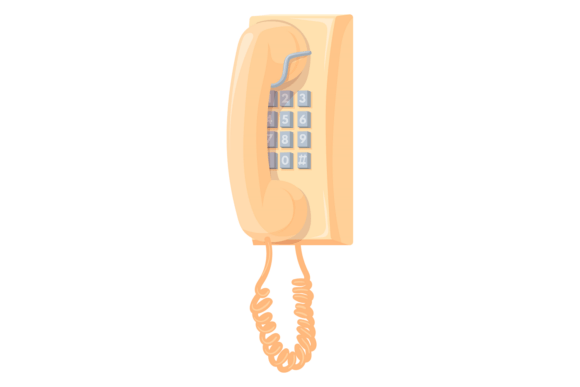
Retro Wall Phone Embroidery Review
As a designer who spends more time than I care to admit staring at stitch charts and fabric swatches, I have learned that not every digital illustration translates well into thread. There is a specific moment in the design process where you have to ask yourself: "Will this look good when it is stitched?" Today, I am evaluating the Retro Wall Phone. House Landline Telepho graphic, an Illustrations asset categorized under Graphics. This piece features a nostalgic house landline telephone icon isolated on a white background, available in vector and raster formats like EPS, JPG, SVG, and transparent PNG.
I pulled this file out of my library with a specific project in mind: a line of boutique kitchen textiles and personalized gifts for a craft fair booth. The retro aesthetic has been dominating social media feeds lately, but nostalgia can easily tip over into clutter if the design lacks clean lines. Here is my honest take on how the Retro Wall Phone. House Landline Telepho performs as a real-world machine embroidery design, and whether it deserves a spot in your digitizing workflow.
The First Impression: Mood and Visual Personality
When you first load the Retro Wall Phone. House Landline Telepho file into your hoop design software, the isolation on the white background works in its favor. It is clean. It does not carry over unnecessary background noise that would complicate the digitizing process. The subject itself—a classic wall-mounted or countertop landline phone—evokes a very specific feeling of mid-century modern comfort. It suggests warmth, communication, and a slower pace of life.
For an embroiderer, the visual personality of this design is approachable. It is not overly intricate, which is a huge plus. Complex illustrations often suffer from "muddy" stitching when reduced to thread, but this icon relies on strong shapes. The receiver hook, the base, and the cord are distinct elements that lend themselves well to traditional embroidery techniques. It feels like a design that belongs in a cozy home environment, making it perfect for items that aim to create a sense of domestic charm.
Real-World Application: Where Does This Fit?
I do not believe in using a sledgehammer to crack a nut, and I certainly do not believe in putting a simple icon on a massive canvas unless the context demands it. The Retro Wall Phone. House Landline Telepho shines brightest when applied to smaller, intimate products. Here is where I see the highest potential for success:
- Kitchen Textiles: A tea towel or a flour sack towel embroidered with this design immediately feels like a curated boutique item. It pairs beautifully with farmhouse decor themes.
- Personalized Gifts: Think of a wedding gift for a newlywed couple setting up their first home, or a housewarming present. The landline phone is a symbol of the home itself, making it a thoughtful, thematic choice.
- Baby Items: Surprisingly, this works well for nursery decor or baby blankets. The rounded shapes are soft and non-threatening, fitting the pastel palettes often used in baby embroidery.
- Craft Business Merchandise: For the Etsy seller or small shop owner, this is a versatile asset. It can be used on tote bags, aprons, and even as a decorative element on a custom cap.
Imagine a customer browsing an online store. They see a sweatshirt with this subtle, vintage-inspired embroidery. It reads as intentional and stylish, not just a random clipart slapped onto fabric. That distinction matters. It elevates the perceived value of the handmade product.
Technical Performance and Stitching Clarity
Transitioning from a digital graphic to a physical embroidery project requires careful consideration of stitch types. The Retro Wall Phone. House Landline Telepho is essentially a line-art style icon. This means it will likely rely heavily on satin stitches for the outlines and perhaps some fill stitches for solid areas like the phone base or the receiver.
One of the critical factors here is stitch density. Because the original graphic is clean and isolated, it allows for a lighter touch. You do not need to pack the threads tightly to achieve clarity. This reduces the risk of fabric distortion, which is a common headache when working with thin fabrics like cotton tea towels or lightweight jersey for t-shirts. However, if you are planning to use this on a tote bag design made of heavy canvas, you might want to increase the density slightly to ensure the texture of the fabric does not swallow the details.
Another technical note involves the cord of the phone. In embroidery, long, thin curves can sometimes pucker if the tension is off. When digitizing this, pay close attention to the running stitch or fine satin work used for the cord. It should flow naturally, mimicking the drape of a real phone cord, rather than looking stiff or angular.
Where to Exercise Caution
While this design is versatile, it is not a one-size-fits-all solution. There are scenarios where the Retro Wall Phone. House Landline Telepho might struggle:
- Small Hoop Sizes: If you attempt to stitch this in a 4x4 hoop without scaling it down significantly, the details may become indistinguishable. Ensure the final stitched size is large enough for the eye to appreciate the shape.
- Textured Fabrics: Avoid placing this on bouclé, chunky knits, or heavily textured weaves. The clean lines of the graphic will get lost in the fabric's own pattern.
- Dense Stitch Areas: If you digitize this with too much fill, it can become stiff and uncomfortable, especially on apparel like sweatshirt embroidery or custom apparel worn against the skin.
- Curved Surfaces: While it can work on a cap, the flat nature of the original icon might look distorted if not carefully adapted to the curve of the hat front.
Color and Contrast Considerations
The source file is isolated on white, which gives you total freedom in choosing your thread colors. However, contrast is king in embroidery. On dark fabrics, you will need to use a stabilizer and possibly a cut-away backing to support the stitches. Light-colored threads on dark fabric can sometimes look faint if the stitch width is too narrow. Conversely, dark threads on light fabric offer excellent clarity.
I recommend testing the design in black and white mockups before committing to a color palette. This helps you visualize the negative space and ensures that the shapes remain distinct regardless of the color combination. For a true retro vibe, consider using muted tones like sage green, mustard yellow, or dusty rose, rather than bright primary colors, which can sometimes feel too cartoonish.
Practical Designer Notes for Success
Before you rush to produce a batch of finished products, follow these practical steps to ensure quality:
- Test on Scrap Fabric: Always run a test stitch-out on the actual fabric you plan to use. This reveals issues with tension, pull compensation, and stabilizer choice.
- Check Licensing: Since this is a commercial asset, verify the license terms. Are you allowed to sell finished items? Is there a limit on the number of units? Do not assume rights; read the fine print.
- Inspect Small Details: Zoom in on the digitized version. Are the corners sharp? Is the cord continuous? Fix any jagged edges in your software before stitching.
- Use Proper Stabilizer: The choice of stabilizer (cut-away vs. tear-away) depends on the fabric. For stretchy materials like baby embroidery projects, a cut-away stabilizer provides necessary support.
Final Verdict
The Retro Wall Phone. House Landline Telepho is a charming, functional, and visually appealing asset for any designer looking to tap into the nostalgia trend. It is not just a pretty picture; it is a well-composed graphic that respects the limitations and possibilities of thread. Whether you are creating a personalized gift for a friend or building a brand identity for your craft business, this design offers a professional finish with minimal hassle.
It fits seamlessly into the world of commercial embroidery and digital product sellers who value clean aesthetics. By paying attention to stitch density, fabric choice, and licensing, you can turn this simple icon into a standout piece of handmade product art. It is a smart addition to any modern embroidery library.