Retro Floral Seamless Pattern Design Review
When I am scouting for a new embroidery file to add to my library, I am not just looking for something that looks pretty on a screen. I am looking for viability. Can it stitch cleanly? Will it hold up after ten washes? Does it have the visual weight to justify a price point on an Etsy listing? Recently, I put the Retro Floral Seamless Pattern Design through its paces to see if it fits into the workflow of a serious craft business or a high-end personalized gift shop.
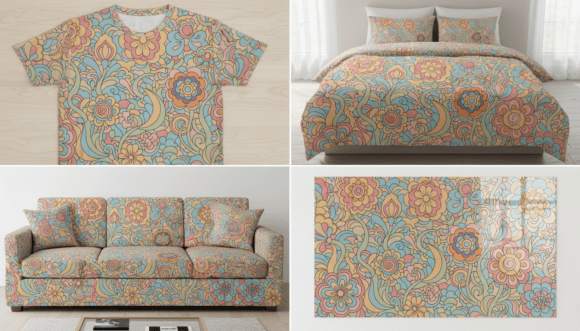
This design is marketed under the categories of Patterns and Graphics, but in the world of machine embroidery, those terms translate directly to how the pattern repeats and how much digital preparation you might need before digitizing. The aesthetic is undeniably strong: a vibrant retro-inspired floral pattern featuring flowing flowers, swirling leaves, and organic shapes in soft pastel and muted vintage tones. It captures that playful 60s–70s boho aesthetic perfectly. But does it work when transferred to fabric?
First Impressions and Visual Mood
The first thing that strikes me about this machine embroidery design is its energy. Unlike rigid geometric patterns that can feel cold or corporate, this design breathes. The organic shapes suggest movement, which is crucial for embroidery because static designs can sometimes look flat once stitched. The use of soft pastels and muted vintage tones is a smart choice for today’s market. We are seeing a shift away from neon brights toward nostalgic, comforting colors that appeal to a broad demographic, from millennials buying nursery decor to Gen Z shoppers looking for unique custom apparel.
Visually, the design feels balanced. There is no single element that overpowers the others; instead, the swirling leaves create a natural rhythm that guides the eye. This is excellent news for a seamless pattern because it means the repeat points should be less obvious once stitched, provided the digitizer handles the edges correctly. For a small shop product, this subtlety adds a layer of professionalism. It doesn’t scream for attention; it invites the customer to look closer.
Real-World Application: The Tote Bag Scenario
To test the practicality of this design, I imagined a specific project: a custom embroidered tote bag for a local artisan market. Tote bags are a staple for any Etsy seller, but they are also one of the most challenging surfaces to embroider due to the thin cotton canvas and the way the bag hangs when filled.
If I were to place the Retro Floral Seamless Pattern Design across the front panel of a heavy-duty canvas tote, the result would likely be stunning. The flowing nature of the floral elements complements the casual, everyday utility of a tote. However, because it is a seamless pattern, I would need to consider the scale. If the pattern is too small, it might get lost in the weave of the fabric. If it is too large, it might overwhelm the bag’s structure. In this scenario, I would likely crop the pattern to focus on a dense cluster of flowers rather than repeating the entire sequence, creating a focal point that feels intentional rather than generic.
I also considered using this design for a sweatshirt embroidery project. The boho aesthetic pairs beautifully with heavyweight fleece or cotton blends often used for hoodies. The muted tones would pop against a cream or oatmeal-colored garment, offering a sophisticated look that appeals to customers looking for commercial embroidery pieces that don’t look like mass-produced fast fashion. The key here is thread color contrast. Because the design relies on subtle tonal variations, using high-quality polyester threads with good sheen will elevate the finished product significantly.
Technical Considerations and Stitch Clarity
As a designer, my eyes naturally go to the details. How will the fine lines of the swirling leaves stitch out? Will they break? Will the fill stitches pucker? The Retro Floral Seamless Pattern Design appears to rely heavily on smooth curves and open spaces, which generally translates well to embroidery. Curves are forgiving; they allow the needle to move fluidly without excessive tension issues. However, there are areas where caution is needed.
I advise testing this design on scrap fabric first, specifically focusing on the smaller leaf tips and the intersections of the flower petals. If the original graphic has very thin strokes, these may need to be thickened during the digitizing process to ensure they register clearly as satin stitch or running stitch. A common mistake with intricate floral patterns is underestimating the stitch density. If the area is too dense, the fabric will pucker, ruining the drape of the final item. Conversely, if it is too sparse, the stabilizer might show through, giving a cheap appearance.
Another critical factor is the choice of stabilizer. For a delicate pattern like this, a cut-away stabilizer is usually the safest bet for garments and items that require frequent washing. A tear-away might suffice for a one-time use embroidered patch, but for a handmade product meant to last, stability is key. I also recommend inspecting the design in black and white mockups. Sometimes, color distractions hide structural weaknesses in the layout. If the design holds up visually without color, it will definitely hold up when stitched.
Where to Use It Carefully
While this design is versatile, it is not a universal fit. There are specific scenarios where the Retro Floral Seamless Pattern Design might struggle:
- Small Hoop Sizes: If you are working with tiny accessories like hair bows or small caps, the detail level of this pattern might become muddy. Fine lines can merge together if the resolution isn't high enough.
- Textured Fabrics: Embroidering a complex pattern over a heavily textured fabric, such as bouclé or chunky knit, can obscure the design. The fabric's texture competes with the thread’s texture.
- Stretchy Fabric: While elastane blends are popular for activewear, they require specialized stitching techniques. A seamless floral pattern might distort if the underlying fabric stretches unevenly during wear.
- Dense Stitch Areas: Avoid placing this design over existing logos or text. The organic flow of the pattern requires clean space to breathe. Layering it over other dense elements can lead to bulkiness and needle breaks.
Impact on Brand and Customer Trust
In the world of digital product sellers and creative entrepreneurs, presentation is everything. A well-executed embroidery design signals quality. When a customer sees the Retro Floral Seamless Pattern Design stitched cleanly on a pillow cover or a kitchen towel, it conveys care and attention to detail. This directly impacts customer trust. People are willing to pay more for handmade goods when they perceive the maker as skilled.
Furthermore, the retro theme taps into current nostalgia trends. By using this design for holiday embroidery gifts or wedding gifts, you are aligning your brand with emotional moments. A set of matching aprons with this floral motif makes for a memorable personalized gift. The design’s versatility allows it to fit into various niches, from nursery decor to boutique branding, giving you flexibility in your design assets portfolio.
Final Verdict for Makers and Sellers
The Retro Floral Seamless Pattern Design is a strong candidate for anyone looking to expand their range of apparel decorators services or craft business offerings. Its aesthetic is timeless yet trendy, and its organic structure lends itself well to the medium of embroidery. However, success lies in the execution. Do not simply upload and print. Take the time to adjust thread colors, check the hoop size constraints, and verify the license terms before selling finished items.
I recommend starting with a few test runs on different fabrics to understand how the colors interact with various material weaves. Once you find the right combination, this design can become a cornerstone of your finished product line. It offers the visual appeal needed to stop scrollers in their tracks on social media, while the sturdy construction ensures that the buyer engagement turns into long-term loyalty. For the discerning designer who values both beauty and function, this is a solid addition to the toolkit.